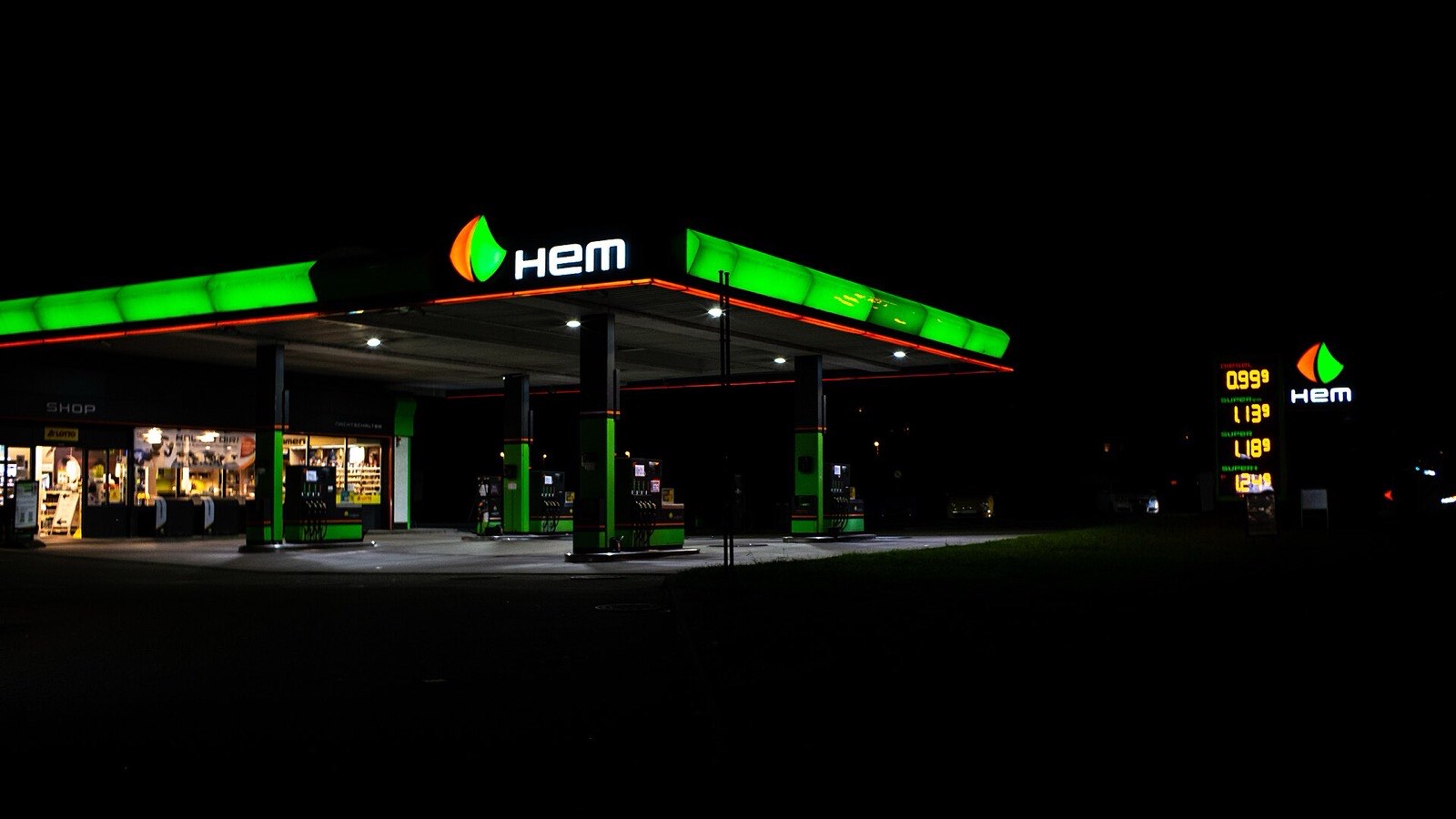
Every litre of fuel sold in Germany carries a carbon price, and 2026 is the year that price stopped being a fixed number. Understanding it explains a permanent, growing slice of what you pay.
How the system works in 2026
Under Germany's national emissions trading system (nEHS), fuel distributors must buy a certificate for every tonne of CO2 their fuel will emit. From 2021 to 2025 the certificate price was fixed by law, ending at 55 euros per tonne in 2025. In 2026 the system entered its auction phase: certificates are auctioned at EEX in Leipzig within a legally fixed corridor of 55 to 65 euros per tonne. The first auctions ran in early July 2026 and continue at least weekly into late October, with fixed-price sales at 68 euros available until early December.
As a rule of thumb, every 10 euros per tonne of CO2 translates to roughly 2.5 to 3 cents per litre at the pump, slightly more for diesel than for petrol because diesel emits more CO2 per litre. The 2026 corridor therefore anchors the carbon component at roughly 13 to 20 cents per litre, inside the prices you see today: as of 20 July 2026, 2.16 €/L for petrol and 2.15 €/L for diesel on the national average.
Why the next years matter more
The nEHS is scheduled to hand over to the European emissions trading system for buildings and transport (ETS2). The exact timing and price path of that transition are still being negotiated at EU level, and serious analysts avoid firm predictions. What is not in dispute: the political design across Europe points toward carbon costs that rise over time, not fall. The carbon cent is the one component of the fuel price with a built-in direction.
For drivers the practical conclusion mirrors our noon-rule guide: the components you cannot influence make the ones you can influence, choosing when and where to fill up, more valuable. A 10-cent spread between stations is now partly a tax-and-carbon arbitrage, and it is on the live map every day.
.jpg)