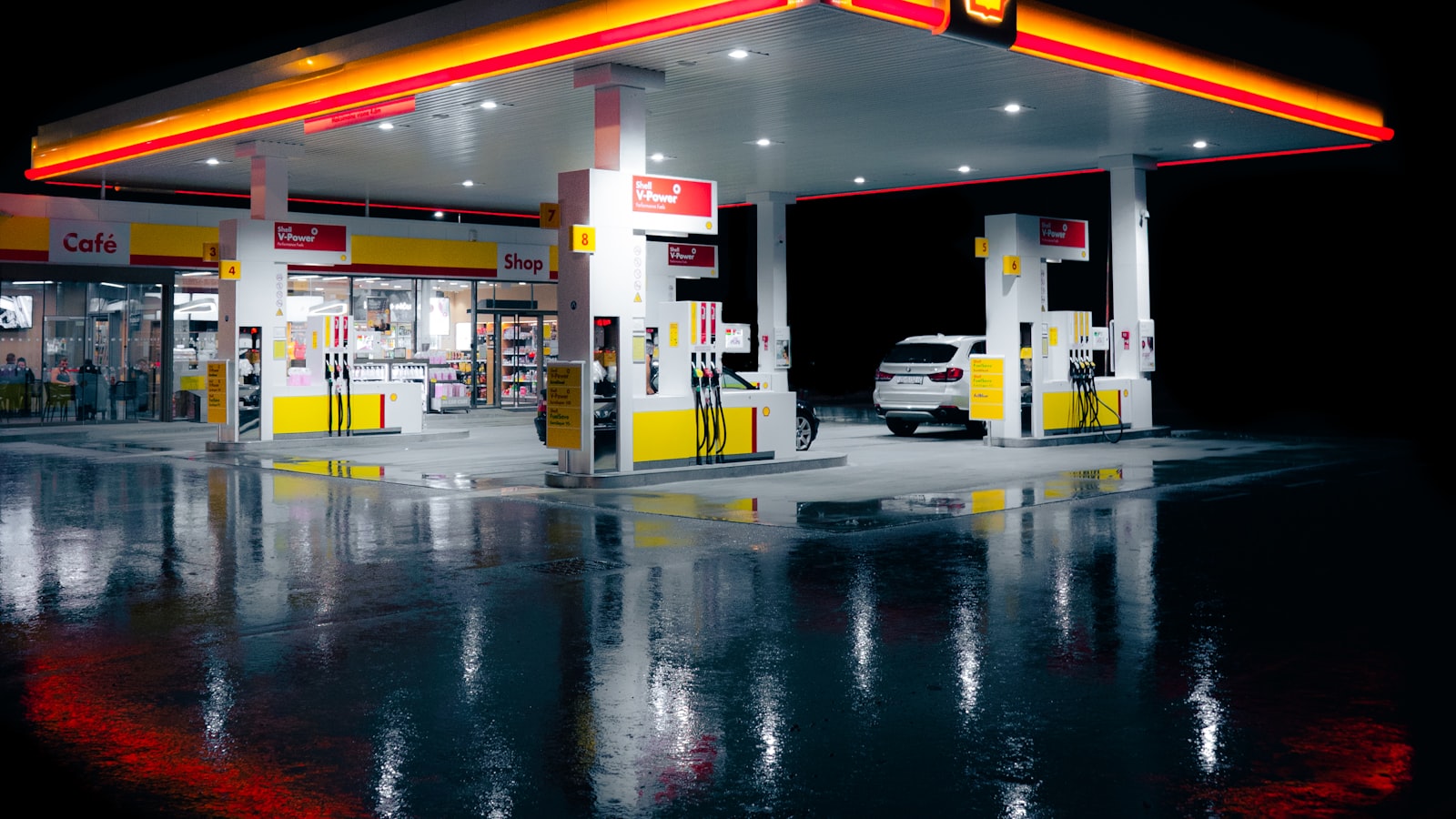
Ask anyone in Trier, Thionville, Arlon or Saarbrücken where to buy fuel and the answer has been the same for a generation: Luxembourg. The habit is so entrenched that the Shell station at Berchem on the A3, the busiest service station in the world, handles roughly 25,000 vehicles a day (Luxtoday). Three quarters of all road fuel sold in the Grand Duchy goes into tanks registered abroad (OECD Economic Survey Luxembourg 2025). Luxembourg does not just tolerate fuel tourism, it was built into the country's tax model.
Here is the live picture for the four markets that meet at Luxembourg's borders. The table recomputes from current station data every time you load this page.
| Country | Gasoline (€/L) | Diesel (€/L) |
|---|---|---|
| 🇱🇺 Luxembourg | 1.76 | 1.86 |
| 🇩🇪 Germany | 2.15 | 2.14 |
| 🇫🇷 France | 2.03 | 2.14 |
| 🇧🇪 Belgium | 1.87 | 2.07 |
Live national averages, cheapest per fuel in bold. As of 22 July 2026, Luxembourg averages 1.76 €/L for petrol and 1.86 €/L for diesel, against an EU average of 1.88 €/L and 1.96 €/L.
Why Luxembourg fuel is cheap
Luxembourg is one of the few European countries that still sets an official maximum retail price for fuel. The Ministry of the Economy publishes these "prix maximaux" several times a month, built from three inputs: the international purchase cost of the product, distribution costs, and taxes (Guichet.lu). Stations may sell below the cap but not above it. The cap itself sits low because the tax layer inside it is thin.
That thin tax layer is the whole story. Luxembourg levies the lowest fuel excise of any country in this table. For 2026 the Tax Foundation puts Luxembourg's excise at 56.9 cents per litre on petrol and 46.5 cents on diesel. Compare the neighbours: Germany charges 65.5 and 47.0 cents, Belgium 60.0 and 60.0, France 68.3 and 59.4. Before a single litre of crude is priced, before VAT, Luxembourg diesel starts up to 13 cents per litre cheaper than the French or Belgian equivalent.
Note the asymmetry, because it explains a pattern drivers have felt for years. Luxembourg's structural advantage on diesel is large against France and Belgium, but almost nil against Germany: the two diesel excise rates, 46.5 against 47.0 cents, are effectively the same. The classic "Luxembourg diesel is far cheaper" story was always mostly a French and Belgian story. On petrol the gap is more even, with Belgium the closest competitor.
The gap is narrowing
The bigger shift is that the advantage is eroding, and Luxembourg is doing part of the eroding itself. Since 2021 the country has charged an explicit CO2 tax on fuels, rising by 5 euros per tonne every year: 20 euros per tonne in 2021, 45 in 2026, and a planned 50 in 2027 (OECD). As a rule of thumb every 10 euros per tonne adds roughly 2.5 to 3 cents per litre at the pump, so the carbon component now sits near 11 to 13 cents. The OECD is explicit that this is partly the point: higher carbon prices are meant to curb the incentive for foreign drivers to refuel in Luxembourg.
The neighbours have pushed the same way. French and German government interventions on fuel prices in recent years narrowed Luxembourg's edge to the point where filling stations along the French border reported sharp drops in volume, and industry bodies now describe fuel-tourism prospects as bleak (Paperjam). At times the cheapest tank in the region is now on the French side of the line, not the Luxembourg side. The live table above, not any old rule of thumb, is what tells you where the advantage sits today.
What it means for your tank
The gap is smaller than it was, but it is still real money per fill, and it is per-tank money you pay every week. Filling a 55-litre tank of diesel in Luxembourg instead of France currently saves about 15.43 €; against Belgium the difference is around 11.95 € per tank. Over a commuting year that is a meaningful sum.
The practical rule for the Greater Region is unchanged: if your route touches a border, check before you fill, do not assume. Thirty seconds on the live map settles which side is cheaper today, and the Luxembourg country page shows current averages and the cheapest stations we track. Developers can pull the same live numbers from our free API.